
Tracing Former Owners of a Fairfax County Property
Work backward from the newest deed, one grantee at a time. The court's land-record images reach back to 1742. But the index changes format across the decades. A modern index query may hand you an image of an older book instead. Each transfer needs its own date, grantor, grantee, deed type, and citation. Only then does the same parcel stay in view from owner to owner.
The county publishes no sample chain. Any table showing deed entries illustrates the fields you would read from actual instruments. It does not show a specific Fairfax sale. Before adding a transfer to your chain, compare its legal description and tax-map reference. Check them against the entries on either side of it.
| Transfer Date | Grantor → Grantee | Deed Type | Book / Page |
|---|---|---|---|
| From recorded deed | Copy both parties as named | Use the instrument label | Copy the court reference |
| From prior acquisition | Prior grantor to current grantee | Read from the image | Follow the index citation |
| Older index-book entry | Match the same land description | Confirm in deed image | Record the older book/page |
Begin with current CPAN index data. It covers records from 1980 forward, book 5391 and higher. For earlier transfers, turn to the index-book images spanning 1742 through 1979. Historic plats can untangle an old subdivision name or address. The Virginia Room's maps and directories can help as well. Even so, the recorded deed remains the proof of each transfer.
Walk the Fairfax County Deed Chain Backward
The reverse chain starts with today's grantee. That owner's grantor then becomes the next earlier grantee, and the pattern repeats. This is the core backward method in Fairfax County land records. Names guide the search. Legal descriptions connect the transfers. Keep in mind that a street address may have changed, and the property can sit under a trust, company, estate, or fiduciary name.
- Open the latest deed for the parcel and copy the grantee, grantor, date, book/page, and legal description.
- Search the grantor as a grantee in the earlier index, using the same name form and nearby record date.
- Compare lot, block, map reference, or metes-and-bounds language before accepting a match.
- Repeat until the chain reaches an older index format or the land description no longer matches.
- Grantor
- The party who conveyed the interest.
- Grantee
- The party who received the interest.
- Chain of title
- The ordered sequence of recorded transfers.
- Legal description
- The written land identifier that can outlast a street address.
How Far Back Fairfax County Ownership Records Go
The Circuit Court reports land records from 1742 to the present. Deed images cover that full span. Index data is another matter. Electronic index data begins in 1980, covering book 5391 and higher. Index-book images handle 1742 through 1979, books A1 through 5390. An old index format is not a missing deed. Don't confuse the two.
Deed books before 1945 live in the Historic Records Center. The clerk reports that all books and microfilm have been converted to digital images. The 1945 marker tells you where older volumes are kept. The index transition is a separate date line entirely. Read both details together when reconstructing former owners.
The Circuit Court CPAN page describes the official remote index and document-image service.
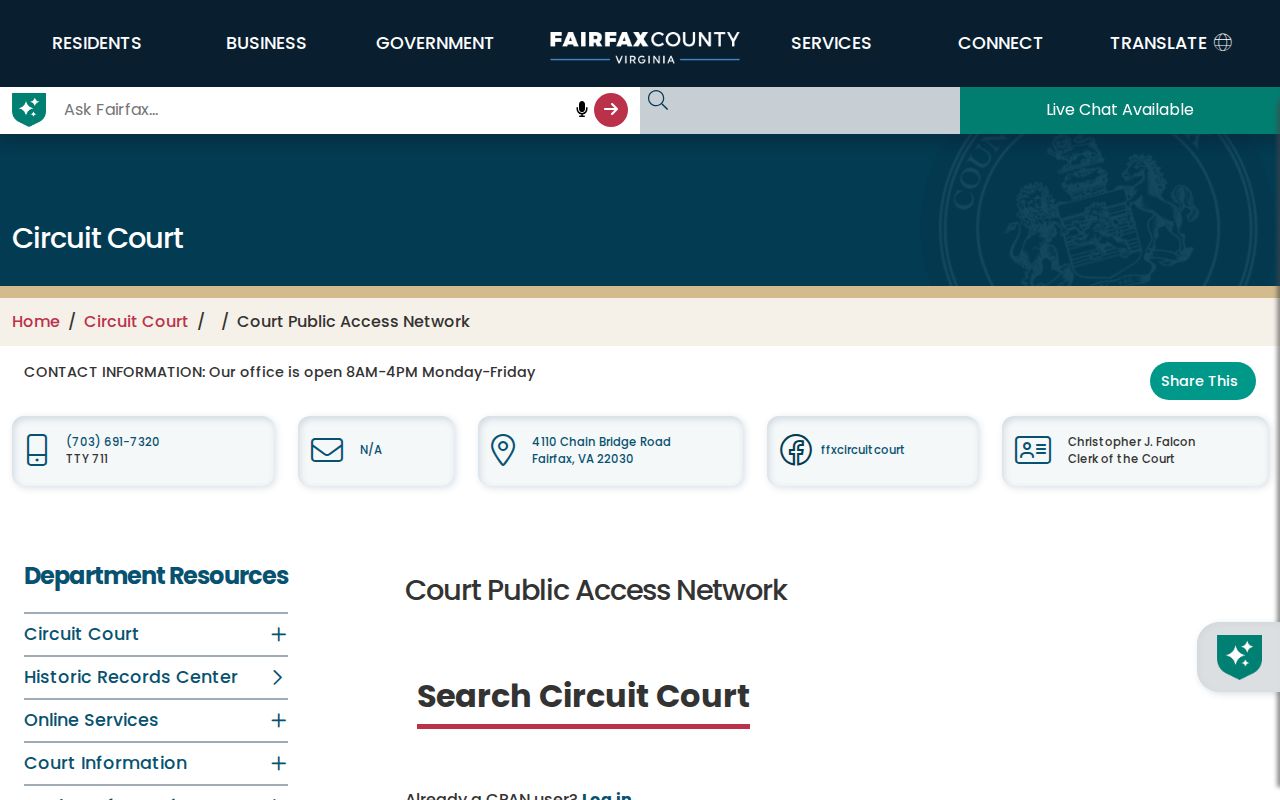
For an official copy of a single document, follow the instructions on the Fairfax County deed records page. The current-owner card is only the first link in the historical chain.
Lawful use. Former-owner research supports house history, family estate work, and property diligence. Do not use a historical chain to track, threaten, harass, or harm a living person.
Use Fairfax County's Index Transition Correctly
CPAN lists electronic index data from 1980 forward, book 5391 and higher. Earlier coverage comes through images of index books A1 through 5390, spanning 1742 to 1979. The deed images themselves run the full 1742-to-present period. The index format changes even though the collection continues underneath it. A modern name search may return nothing for an old transfer. That is a signal, not a verdict. Move to the matching index-book image before concluding the deed is absent.
Work backward through the records. Record the party role, deed date, book and page, and land description for every instrument. Search each prior grantor as a grantee, and allow time for name variants and fiduciaries. Keep notes on the index series and date range you used. That habit lets another researcher retrace the path. A clean chain comes from reading deeds, not from trusting index lines alone.
Pre-1945 Fairfax Deed Books Have a Separate Home
Fairfax County's Historic Records Center holds deed books from before 1945. These volumes sit at the Circuit Court complex. Its public research room is open Monday through Friday, 8:00 a.m. to 4:30 p.m. Digital images sit at public terminals and through CPAN. A book's home in the Historic Records Center does not mean paper only. Digital formats can be consulted as well.
An index image may point to an older book. Note the book and page before switching formats. Name entries there may be handwritten. The arrangement can differ sharply from a modern electronic index. Read the referenced deed itself. Do not rely on the index line alone. That is what makes a chain reliable.
The public research-room page explains access to the courthouse terminals and older deed-book holdings.
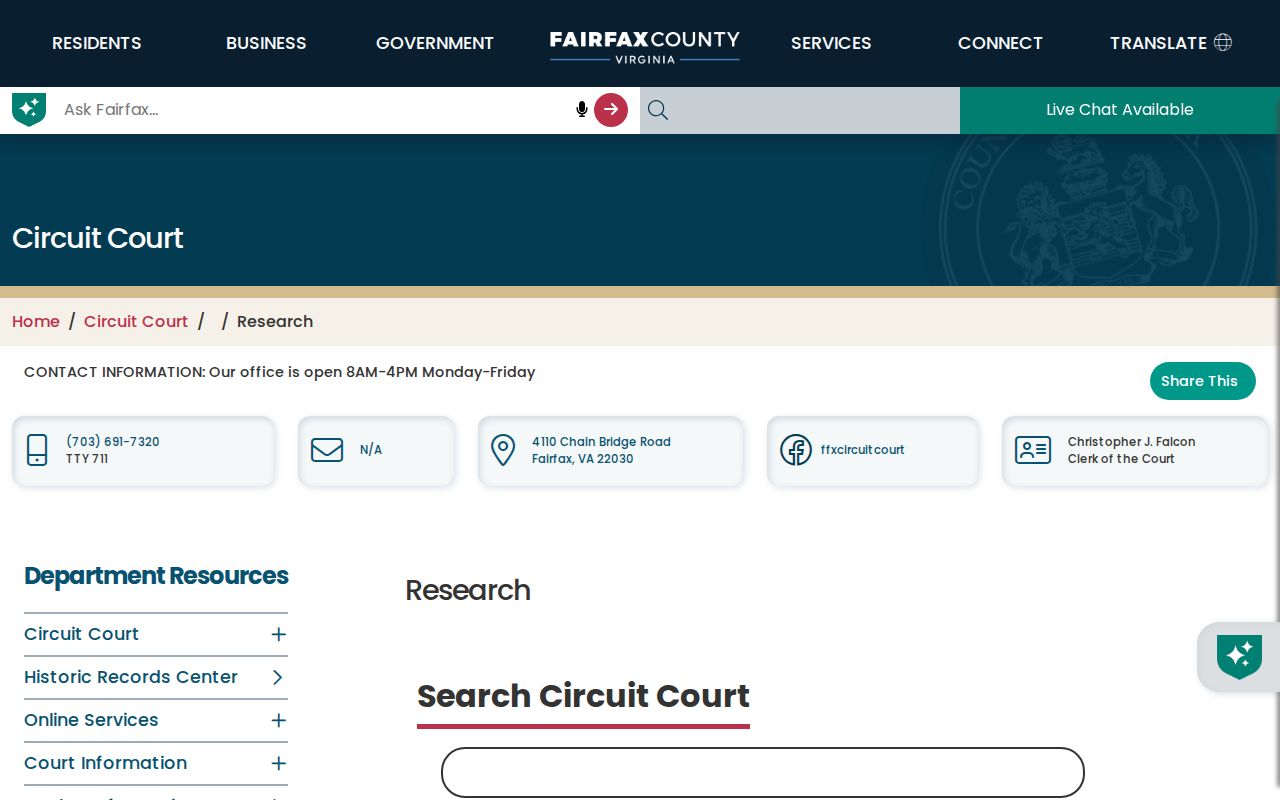
The clerk's office staff can walk a visitor through the deed records system, though they will not carry out the title research themselves. Fairfax County's court instead directs anyone facing a complicated title question to a title company or an attorney for help.
Probate Can Interrupt a Fairfax Owner Chain
Not every transfer in Fairfax County property records reads as a plain sale. An executor or administrator may convey land out of an estate. A trustee can step into a later deed. Probate explains where that authority came from. CPAN holds probate wills from 1742 forward, along with fiduciary records. The paper trail behind an heir's deed is often sitting nearby.
Death certificates live in Virginia's vital-record system and follow separate access rules. A death record, a probate file, and an executor deed are three different things. Start with the probate entry to learn who represented the estate. Then find the recorded land instrument that actually moved title.
CPAN offers will document images from 1742 onward. Older will-index images run through 1978. Later index data sits in a separate series. A fiduciary can surface in a will, a qualification, or an estate record. The land instrument may be indexed under that representative instead of the deceased owner. That is a common trap. Search the estate-related name and the grantee in the deed chain. Then compare property descriptions before linking the two.
The Virginia Room Helps Date an Old Address
The Fairfax County Public Library's Virginia Room collects historical maps, newspapers, photographs, and manuscripts. It also holds local legal materials, directories, telephone books, rare books, and microform. A CPAN station and a microform reader-printer are on site. That combination bridges an old street address or family name straight into the deed system.
The landing page does not list exact directory year ranges. Check the catalog before counting on any particular year. Directories can reveal address changes or household names. But the deed, plat, or probate record still anchors the chain of ownership.
The Virginia Room collection page describes its research tools and local-history holdings.
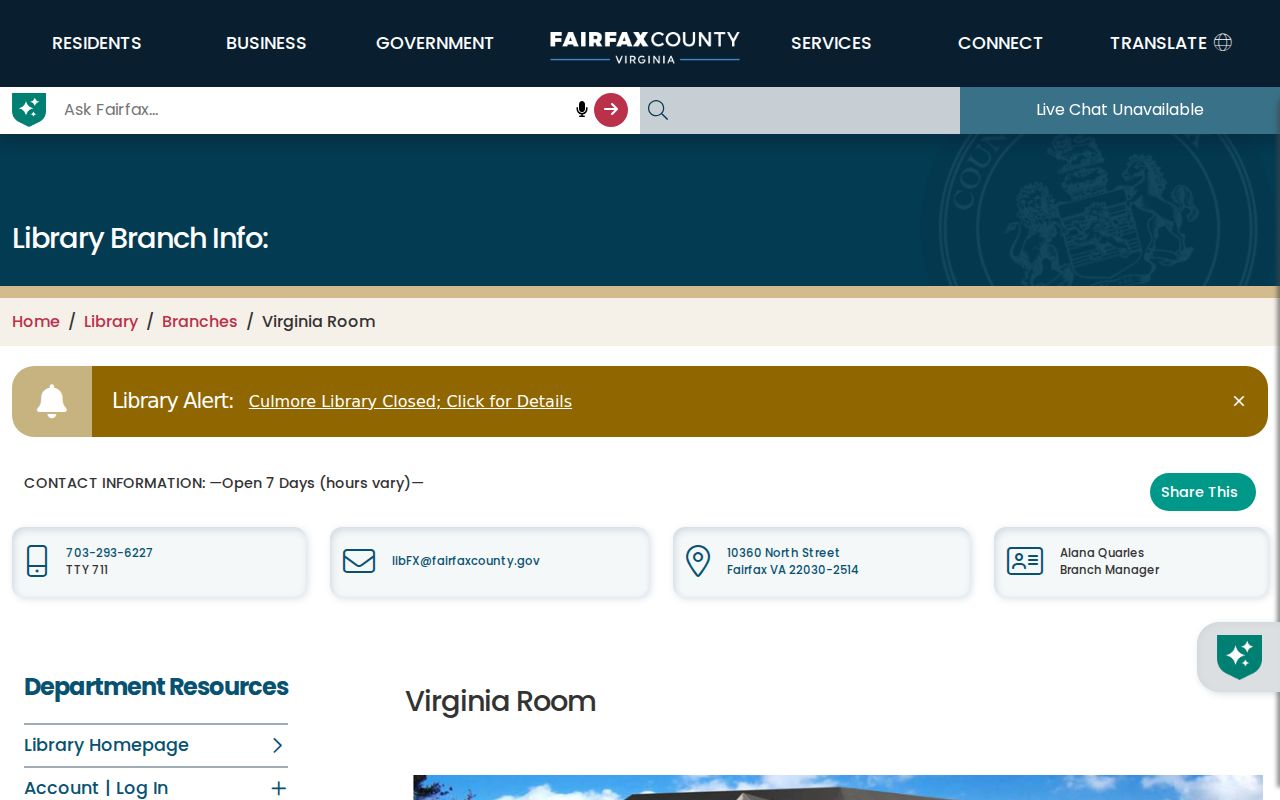
Treat historical sources as lead generators, then return to the recorded land documents. A directory entry only places a person at an address in a given year. The recorded instrument, alone, proves the conveyance.
Keep an Older Fairfax Address Tied to the Lot
A past owner may show up in a Fairfax County deed under a farm, subdivision, or lot description older than today's street address. Plats split and rename land. Address ranges shift as roads extend or get renumbered. When names or addresses vary across property records, carry forward the exact metes-and-bounds calls, lot and block, deed book and page, and any tax-map reference in each document.
Historical maps and directories explain why a modern address looks different. They cannot supply the missing legal link. The recorded deed and the plat must describe the same land before two owners belong in one chain. If the descriptions stay unclear, a title professional can review the sequence. A surveyor can then locate the current boundary.